
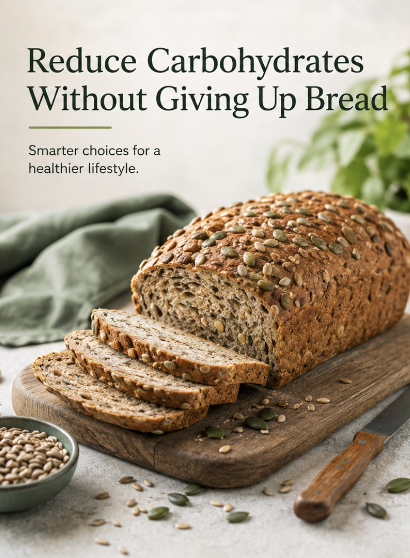
For many people, reducing carbohydrates is one of the first steps towards improving their diet. Whether your goal is to support weight management, maintain steady energy levels or simply make healthier food choices, lowering your carbohydrate intake doesn’t have to mean giving up the foods you enjoy.
Bread is often one of the first foods people remove from their shopping list. However, not all bread is created equal. By understanding where carbohydrates come from and making a few smarter choices, it’s entirely possible to enjoy bread as part of a balanced, lower-carbohydrate lifestyle.
Why Do People Choose to Reduce Carbohydrates?
Carbohydrates are one of the body’s main sources of energy, but many modern diets contain far more refined carbohydrates than we actually need. Foods made from highly processed white flour, sugary snacks and sweetened drinks can contribute to rapid spikes and drops in blood sugar, often leaving you feeling hungry again sooner.
Reducing refined carbohydrates can help many people:
- Feel fuller for longer
- Reduce unnecessary snacking
- Support weight management goals
- Maintain more consistent energy throughout the day
- Make more mindful food choices
The key isn’t to eliminate carbohydrates altogether, but to be selective about where they come from.
Not All Carbohydrates Are the Same
One of the biggest misconceptions is that all carbohydrates should be treated equally. In reality, the quality of the carbohydrate source matters just as much as the quantity.
Refined carbohydrates
These are typically found in products such as:
- White bread
- Pastries
- Cakes
- Sugary breakfast cereals
- Biscuits
These foods are often lower in fibre and digested quickly, meaning they can leave you feeling hungry again not long after eating.
Better carbohydrate choices
Many healthier carbohydrate sources provide additional nutrients, fibre and protein, helping to support a more balanced diet. These include:
- Vegetables
- Legumes
- Whole grains
- Seeds
- Lower-carbohydrate bread made with nutrient-rich ingredients
Choosing foods that contain more fibre and protein can help you stay satisfied for longer.
Do You Really Need to Give Up Bread?
The simple answer is no.
Bread has been a staple food for centuries and can still have a place in a healthy eating plan. The important factor is choosing bread that better suits your nutritional goals.
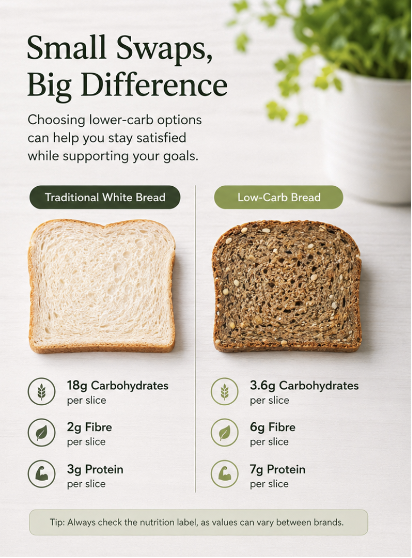
Many traditional supermarket loaves are made primarily with refined wheat flour, resulting in a relatively high carbohydrate content. However, there are now plenty of alternatives available that contain fewer carbohydrates while offering more protein and fibre.
Switching to a quality low-carb bread can be a simple way to continue enjoying sandwiches, toast and lunchtime favourites without consuming as many carbohydrates as conventional bread.
What Makes Low-Carb Bread Different?
Low-carb bread is typically made using ingredients that naturally contain fewer digestible carbohydrates than standard wheat flour.
Depending on the recipe, these may include:
- Seeds
- Nuts
- Oat fibre
- Flaxseed
- Sunflower seeds
- Plant-based fibres
- High-protein ingredients
The result is a loaf that often provides:
- Fewer carbohydrates per slice
- More fibre
- Higher protein content
- A satisfying texture and flavour
As with any food, it’s worth checking the nutritional information, as recipes and carbohydrate levels vary between brands.
Simple Ways to Cut Carbohydrates Throughout the Day
Reducing carbohydrates doesn’t require a complete overhaul of your diet. Small changes can make a noticeable difference over time.
Choose a different bread
Rather than avoiding sandwiches or toast completely, simply swap your regular loaf for a lower-carbohydrate alternative.
Add more protein
Including foods such as eggs, chicken, fish, yoghurt or beans can help create balanced meals that keep you fuller for longer.
Fill Half Your Plate with Vegetables
Vegetables provide fibre, vitamins and minerals while naturally containing fewer carbohydrates than many processed foods.
Be Mindful of Snacks
Instead of reaching for biscuits or crisps, consider options such as:
- Mixed nuts
- Cheese
- Greek yoghurt
- Vegetable sticks with hummus
- Boiled eggs
These choices often provide more protein and healthy fats, helping to keep hunger at bay.
Don’t Forget About Fibre
When reducing carbohydrates, fibre should remain a priority.
Fibre supports healthy digestion, contributes to feelings of fullness and plays an important role in a balanced diet. Choosing foods that are naturally rich in fibre, including many low-carb breads, vegetables, seeds and legumes, can help ensure you’re still meeting your nutritional needs.
Focus on Sustainable Changes
One of the biggest reasons diets fail is because they’re too restrictive.
Completely removing favourite foods can make healthy eating feel difficult to maintain. Instead, look for practical swaps that fit naturally into your everyday routine.
Simple changes such as choosing healthier snacks, increasing your vegetable intake and selecting bread with a lower carbohydrate content can all contribute to a more balanced way of eating without feeling like you’re missing out.
Final Thoughts
Reducing carbohydrates doesn’t mean saying goodbye to bread altogether. By understanding the difference between refined carbohydrates and more nutritious alternatives, you can make informed choices that better support your lifestyle and health goals.
Small, consistent changes are often the easiest to maintain, and something as simple as choosing a quality low-carb bread can help you enjoy familiar meals while keeping your carbohydrate intake in check. Healthy eating isn’t about perfection—it’s about finding an approach that works for you over the long term.